New 2026 Speed Limits on Pakistan Motorways: Avoid Heavy E-Challans
پاکستان موٹرویز اور ہائی ویز پر نئی سپیڈ لمٹ نافذ – بھاری ای چالان سے کیسے بچیں؟
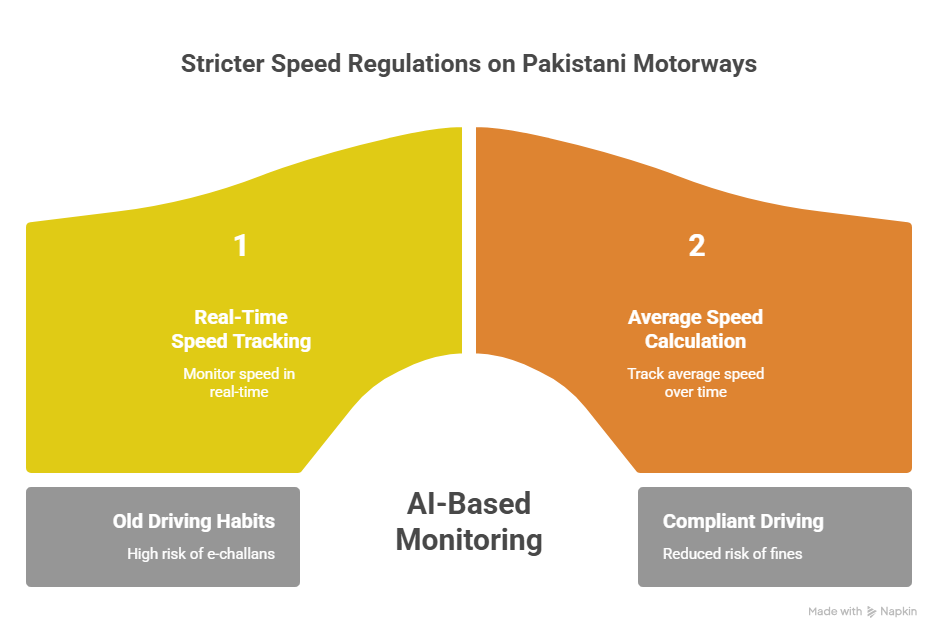
The National Highway and Motorway Police (NHMP) has officially rolled out a massive overhaul of speed regulations across Pakistan’s road network for 2026. If you frequently travel on the M-2 (Lahore-Islamabad), M-11 (Sialkot Motorway), or standard national highways, relying on old driving habits will now guarantee a severe financial blow. The government has drastically narrowed the margin of error, pairing strict new speed limits with a highly aggressive, AI-powered E-Challan camera grid that captures both instantaneous and average vehicle speeds.
نیشنل ہائی وے اینڈ موٹروے پولیس نے 2026 کے لیے پاکستان بھر میں سپیڈ لمٹ کے نئے قانون کا اعلان کر دیا ہے۔ موٹروے پر اب جدید کیمرے نصب کر دیے گئے ہیں جو آپ کی تیز رفتاری کو فوری طور پر نوٹ کر کے بھاری ای چالان سیدھا آپ کے گھر بھیج دیں گے۔
The Exact 2026 Speed Limits
The NHMP has categorized vehicles strictly. Exceeding these limits by even 5 km/h via the automated toll-to-toll calculation will generate an un-contestable digital penalty:
Light Transport (LTV / Cars)
M-2, M-1, M-11 SectorsPassenger Vehicles (Buses)
All MotorwaysHeavy Traffic (HTV / Trailers)
Strict Middle/Left Lane OnlyHow the “Point-to-Point” E-Challan Works
A massive misconception among drivers is that slowing down only near the physical camera poles prevents fines. In 2026, the ANPR (Automatic Number Plate Recognition) system tracks your average speed. When you enter a toll plaza, your exact entry timestamp is recorded. When you exit, the AI calculates the distance divided by your travel time. If your mathematical average exceeds 120 km/h, an E-Challan is instantaneously generated against your CNIC before the toll barrier even lifts.
How to Verify if You Were Caught Speeding
Because these automated fines are primarily sent via SMS, drivers with outdated registered mobile numbers often never receive the notification. Months later, this hidden penalty actively blocks their vehicle token tax renewals or delays vehicle ownership transfers, resulting in heavy compounding late fees.
Proactive Setup: Do not wait for a text message. After completing a long motorway journey, it is highly recommended to manually verify your status. Simply navigate to the Punjab Police digital portal or the unified M-Tag application, enter your Vehicle Registration Number, and scan for any actively generated 17-digit PSID codes. Doing this within 72 hours of your trip ensures you never face sudden legal friction or compounded penalties later in the year.
Motorway Fine FAQ
Q. How much is the overspeeding penalty in 2026?
The basic overspeeding penalty for light transport vehicles starts at Rs. 2,500. However, extreme reckless driving (exceeding 150 km/h) can trigger dangerous driving charges, exceeding Rs. 5,000 and temporary impoundment.
Q. Does M-tag auto-deduct the E-Challan fine?
No, the M-Tag strictly deducts the toll plaza fee. Traffic fines are managed entirely separately by the NHMP and must be settled via the official online 17-digit PSID payment portals via e-Pay Punjab or banking apps.
Final Summary (حتمی نتیجہ)
The unmonitored highways of the past are officially closed. Pakistan’s interconnected digital grid guarantees that every single kilometer operated above the 120 km/h threshold is mathematically logged. To protect your finances and vehicle registration status, adhere strictly to the limits and routinely check your vehicle registration online to clear any hidden penalties.